
"Burundi coffee flavor"
900 article(s) found

History and Culture of Origin and Development of Bourbon Fine Coffee beans in Burundikayanza Province, Burundi
Burundi has the most diverse and successful coffee industry in the world, and has its own characteristics. Coffee in this country was introduced by Belgian colonists in 1930 and is now grown only on small farms. Unfortunately, many of these farms are on the border with war-torn Rwanda, putting pressure on coffee production. Coffee produced in Burundi.

Burundian Coffee with excellent acidity description of Burundian Coffee Flavor characteristics of Fine Coffee
There are many plateaus and mountains in Burundi, most of which are made up of the plateau on the east side of the East African Rift Valley. The national average elevation is 1600 meters, which is known as the mountain country. According to the topography of Burundi, it can be divided into three regions: the western plain, along the Ruzizi River, the Rift Albrtine plain, 774 to 1000 meters above sea level; and the central and western mountains, with an average elevation of 1700 meters, with the highest peak in Bujumbura.

Burundikayanza province, Burundi, the market price of sunburn bourbon varieties is simple.
Variety: bourbon seed processing plant: Panjia processing plant flavor: grape peel, orange wine, fermented fruit this batch is sunburn bourbon species, micro-batch, producing area is located in Cabuye District, Kayanza Province, Parnjia treatment plant Mardadi peak, very high altitude, even more than 2000 meters in the mountains, fertile soil, gravelly soil, very suitable for coffee growth, recognized as the best coffee in Burundi

Stories and allusions of fine coffee beans grown in the sun bourbon in Burundikayanza province, Burundi
For the exchange of professional baristas, please pay attention to the coffee workshop (Wechat official account cafe_style) Burundi (Burundi) has the most varied and successful coffee industry in the world, and has its own characteristics. Coffee in this country was introduced by Belgian colonists in 1930 and is now grown only on small farms. Unfortunately, many of these farms are connected to war-torn Rwanda.

Introduction of Burundian Fine Coffee from Lujiabao treatment Plant, Ngozi Province, Burundi
Professional coffee knowledge exchange more coffee bean information please follow the coffee workshop (Wechat official account cafe_style) Burundi. Ngozi province. Lujiabao processing Plant. Burundi Ngozi Rugabo Washed is a coffee-producing country in East Africa that is attracting more and more attention-- BURUNDI, Burundi. There is not much relevant information, and the text and pictures found on the Internet are very limited and my coffee friends.

Evaluation characteristics and Flavor description of Burundian Coffee Bean
The evaluation characteristics and flavor description of Burundian coffee beans the introduction of the region where the varieties are produced and who picked them is of great significance to us. The Burundian flag is rectangular with a ratio of length to width of 5:3. Two crossed white wide stripes divide the flag into four triangles, the upper and lower two are equal in red, and the left and right two are equal in green. There is a white round ground in the center of the flag, with three green edges inside.
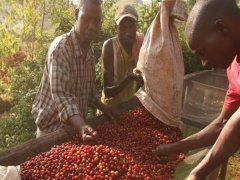
Description of Burundian Bourbon Coffee Flavor in the Heart of Africa Sun description of hand-pulping parameters and introduction of Parma treatment Plant
Professional baristas please follow the coffee workshop (Wechat official account cafe_style) Burundian Champion processing Plant (Burundi Kayanza Kabuye SEGEC Mpanga Natural) production area: Kayanza Kabuye variety: bourbon (Bourbon) altitude: 1800 meters above sea level: sun harvest time: may August flavor

Description of Burundian Coffee Flavor introduction of Grinding Calibration method for producing areas of Burundian Coffee varieties
Burundi Coffee Flavor description: Burundian Coffee has the most diverse and successful coffee industry in the world, and has its own characteristics. Burundian coffee is aromatic and has excellent acidity. Burundian coffee is produced in Burundi (Burundi), which is now grown only on small farms.

Description of the characteristics and flavor of Burundian coffee. Introduction to the taste of the variety.
Burundian coffee belongs to which region characteristics and flavor description varieties taste introduction Burundian (Burundi) coffee was introduced by Belgian colonists in 1930. Unfortunately, many of these farms are on the border with war-torn Rwanda, putting pressure on coffee production. Coffee origin in Burundi: Burundian coffee is now available only in Burundi.

Burundikayanza province, Burundi, sunburn bourbon boutique coffee beans, brand recommendation and village
For the exchange of professional baristas, please pay attention to the coffee workshop (Wechat official account cafe_style) Burundi (Burundi) has the most varied and successful coffee industry in the world, and has its own characteristics. Coffee in this country was introduced by Belgian colonists in 1930 and is now grown only on small farms. Unfortunately, many of these farms are connected to war-torn Rwanda.

Excellent acidity Burundian Coffee Grinding characteristics Variety Flavor description Manor
Coffee production in Burundi: Burundian coffee is now grown only on small farms. Almost all coffee produced in Burundi is Arabian coffee beans, while coffee trees in Ngozi are planted at an altitude of more than 1200 meters. Characteristics of Burundi Coffee: Burundi (Burundian) has the most diverse and successful coffee industry in the world, and has its own characteristics.

Spicy aftertaste of Burundi coffee flavor Introduction Jackson Bourbon variety
Burundi coffee has been in a state of chaos for a long time, with a large number of old and new green beans mixed together, making this coffee unsuitable for grading. The coffee is coarse but mild and has characteristics similar to Kenya coffee. Sweet, fruity flavor with a spicy finish. Dry aroma (1-5): Not applicable Wet aroma (1-5): Not applicable Acid

Mellow taste, rich aroma, excellent acidity Burundian coffee bean flavor Burundian coffee bean bron
Burundi coffee was introduced by Belgian colonists in 1930. Unfortunately, many of these farms are on the border with war-torn Rwanda, putting pressure on coffee production. Coffee production in Burundi: Burundian coffee is now grown only on small farms. Almost all the coffee produced in Burundi is Arabian coffee beans.

Flavor description of Burundian Coffee varieties with Sweet Flavor introduction of Fine Coffee
The capital Bujumbura (Bujumbura), with a population of 393000 (2012), is the political, economic and cultural centre of Burundi. Bujumbura was formerly known as Wusumbura. In the west of the border, the north bank at the eastern end of Lake Tanganyika. The average annual temperature is about 22 to 26 ℃. The city is backed by mountains and lakes, with a pleasant climate, beautiful scenery, lush trees, flowers and expanding tourism facilities.

What are the characteristics of Burundian coffee from the Nzove washing plant in Burundi?
Professional coffee knowledge exchange more coffee bean information please pay attention to the coffee workshop (Wechat official account cafe_style) the geographical environment of Burundi is very suitable for coffee cultivation. The territory is mountainous, with suitable altitude and climate. There are no coffee farms in the country and Burundian coffee beans are mainly produced by a large number of small farmers. In recent years, these small producers have become more and more capable of organizing.

Characteristics of Burundian Coffee, introduction to Burundi
Following Kaibei (official Wechat account vdailycom) found that Beautiful Cafe opened a small shop of its own. Burundi is an agricultural and animal husbandry country and one of the least developed countries in the world declared by the United Nations. The difficulty of its economic development lies in its small country, large population, poor resources and no access to the sea. In 1991, the Government of Burundi signed the third phase with the International Monetary Fund (1991-1994).

History of Origin and Development of Water-washed bourbon species in Kayanza Province of Burundi Burundi Bulundi Champion processing Plant
This is excellent news for countries that earn more than 80% of their foreign exchange earnings from coffee exports. Due to the abundant coffee growing season Rain Water and good field management, coffee production in 2004-2005 was significantly higher than that of last year. According to Burundian officials, the output of coffee beans this year will reach 36000 tons, a six-fold increase over last year (5600 tons).

How to drink Burundian collines Collins Coffee beans _ Burundian Heart of Africa Coffee beans have special flavor
Professional coffee knowledge exchange more coffee bean information please follow Coffee Workshop (Wechat official account cafe_style) Burundian Coffee processing Plant: Gakenke Gakenke washing Plant Gakenke washing Plant was built in 1991, located in Kayanza province in northern Burundi, close to the Rwandan border, Cayanza has always been the best coffee production in Burundi

Burundian coffee bean flavor taste manor production area introduces Burundian boutique coffee beans
Burundian coffee market: Burundian coffee products are mostly exported to the United States, Germany, Finland and Japanese flavor: mellow taste, rich aroma, excellent acidity recommended roasting method: medium to deep roasting ★★: good Burundian coffee characteristics: Burundi (Burundi) has the world's largest variety of coffee, the most successful operation of the coffee industry, and has its own characteristics. Burundian.

A brief introduction to the market price of Burundian boutique coffee beans with mellow taste
There are two major ethnic groups in Burundi, and only about 15 percent of the Tutsi have ruled the country since the 16th century, controlling the civilian population, which is mainly made up of Hutu, plus a very small number of indigenous Twa. This abnormal social structure in which ethnic minorities occupy a high position has buried the evil seed of national instability, and in 1